1、 The source of natural rubber
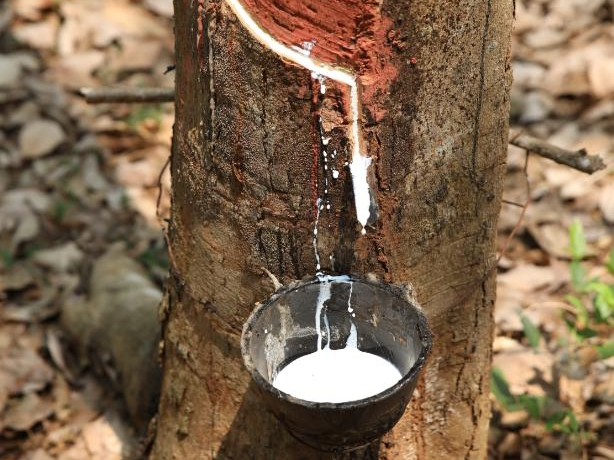
Natural rubber is a highly elastic material obtained by collecting and processing natural plants. There are no less than two thousand species of plants in nature that contain rubber components. But for rubber trees with high rubber content, high yield, good quality, and easy collection, the first choice is the Brazilian rubber tree. Therefore, over 98% of the world's total natural rubber production currently comes from Brazilian rubber trees.
2、 Composition of natural rubber latex
Natural rubber latex is a viscous milky white liquid that looks like milk. It is a milky water dispersion of rubber particles in a near neutral medium. Due to the action of oxygen and microorganisms in the air, the acidity of latex increases and it can naturally solidify within 2-12 hours. To prevent natural solidification, a certain amount of ammonia solution needs to be added as a preservative.
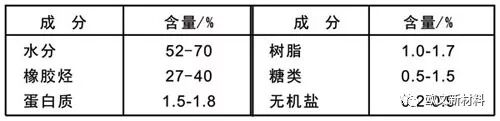
Table 1 Main components of natural rubber latex
According to the data in Table 1, besides rubber hydrocarbons and moisture, latex contains approximately 10% waste rubber components, which have a significant impact on the properties of latex and solid rubber.
3、 The structure of natural rubber
Modern scientific research has shown that at least 97% of ordinary natural rubber is a cis-1,4 addition structure with a small amount of isoprene (3,4 addition structure with a small amount of isoprene), and its molecular structure formula is:
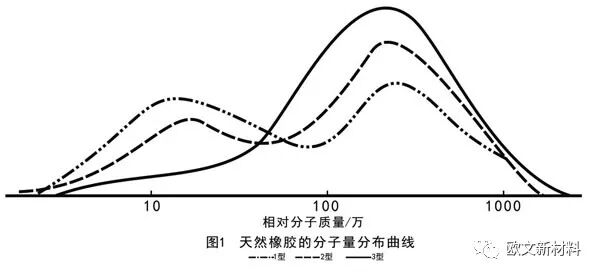
Natural rubber, like other polymer compounds, has polydispersity, meaning that the molecular chains have varying lengths and molecular weights. Its average molecular weight is about 700000, which is equivalent to an average degree of polymerization of around 10000. The range of molecular weight distribution is relatively wide. According to foreign literature, the vast majority of molecular weights are between 30000 and 10 million, and the molecular weight distribution index H is between 2.8 and 10. The molecular weight distribution curve of natural rubber is shown in Figure 1.
4、 Properties of natural rubber
(1) Chemical properties
Natural rubber is unsaturated rubber, with each chain link containing a double bond that can undergo addition reactions. In addition, due to the influence of double bonds and methyl substituents, the hydrogen atom on the methylene group near the double bond becomes active, making it prone to substitution reactions. Due to the structural characteristics mentioned above, natural rubber is prone to undergo sulfurization reactions (structural reactions) with vulcanizing agents, oxidation and cracking reactions with oxygen and ozone, chlorination and bromination reactions with halogens, and cyclization reactions under the action of catalysts and acids.
However, as natural rubber is a polymer compound, it has the reaction characteristics of olefinic organic compounds, such as slow reaction rate, incomplete and uneven reaction, and the coexistence of multiple chemical reactions, such as oxidative cracking reaction and structural reaction.
The most important chemical reactions in natural rubber are oxidative cracking and structuring reactions. The former is the theoretical basis for the plastic processing of raw rubber and also the cause of rubber aging; The latter is the theoretical basis for producing vulcanized rubber through vulcanization processing of raw rubber. The chlorination, cyclization, hydrogenation and other reactions of natural rubber can be applied to the modification of natural rubber.
(2) Good comprehensive physical and mechanical properties
Natural rubber has good elasticity at room temperature. This is due to the amorphous state and good flexibility of natural rubber molecular chains at room temperature. The density is 0.913g/cm2, the elastic modulus is 2-4MPa, which is about one thirty thousandth of steel, and the elongation is 300 times that of steel, with a maximum of 1000%. At 0100° At ℃, the rebound rate of natural rubber can reach over 50%~85%.
Natural rubber has good regularity in molecular structure and can crystallize under external forces, making it a crystalline rubber with self reinforcing properties. The tensile performance of pure rubber vulcanized rubber is second only to polyurethane rubber, which can reach 17-25MPa. After carbon black reinforcement, it can reach 25-35MPa. The 300% tensile stress can reach 6-10MPa, and the 500% tensile stress is above 12MPa. The tear strength can reach 95kN/m, and the strength loss at high temperature (93 ℃) is about 35%.
5、 Application of natural rubber
Due to its series of physical and chemical properties, especially its excellent resilience, insulation, water resistance, and plasticity, as well as valuable properties such as oil resistance, acid resistance, alkali resistance, heat resistance, cold resistance, pressure resistance, and wear resistance after appropriate treatment, natural rubber has a wide range of applications.
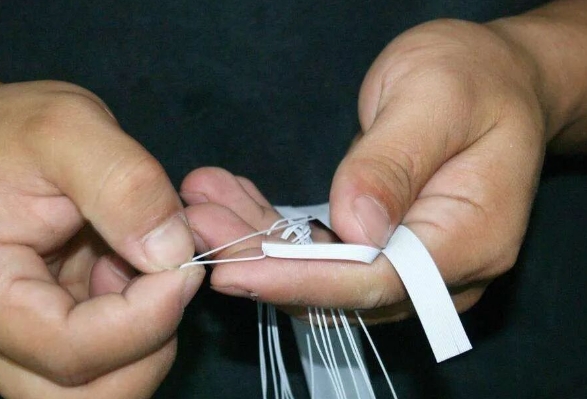
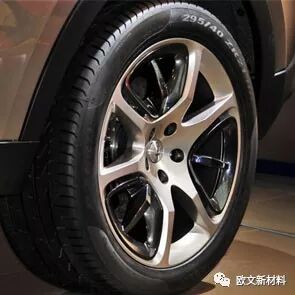
Natural rubber is mainly used in tires, tapes, hoses, wires and cables, and most rubber products, and is the most widely used rubber. Rain boots, warm water bags, and elastic bands used in daily life; Surgical gloves, blood transfusion tubes, and condoms used in the healthcare industry; Various tires used in transportation; Conveyor belts, transport belts, acid and alkali resistant gloves used in industry; Irrigation hoses and ammonia bags used in agriculture; A sounding balloon used for meteorological measurements.